How to turn on vpn on microsoft edge 2026
'%2F%3E%3Ctext%20x%3D'50%25'%20y%3D'50%25'%20dy%3D'.35em'%20text-anchor%3D'middle'%20font-family%3D'-apple-system%2CBlinkMacSystemFont%2CSegoe%20UI%2Csystem-ui%2Csans-serif'%20font-size%3D'100'%20font-weight%3D'600'%20fill%3D'%23fff'%3ECG%3C%2Ftext%3E%3C%2Fsvg%3E)
How to turn on vpn on microsoft edge — that’s the exact question you’ll get answered here. Quick fact: enabling a VPN in Edge is built into the browser and doesn’t require a separate app if you’re using a compatible service. This guide gives you a simple, step-by-step way to turn on a VPN in Edge, plus extra tips to keep your browsing safe and fast.
- Quick setup steps
- Troubleshooting tips
- VPN comparison and features
- Common questions answered
Useful resources unclickable text only: https://www.microsoft.com, https://www.edgetutorials.org, https://www.vpnmentor.com, https://en.wikipedia.org/wiki/Virtual_private_network, https://www.techradar.com
Why Use a VPN in Microsoft Edge?
Using a VPN virtual private network hides your IP address, encrypts your traffic, and helps you bypass regional restrictions. Edge’s built-in VPN-like features, plus compatible extensions, offer a smoother, more integrated experience. In 2025, global VPN usage rose by about 18% year-over-year, and a sizable chunk of users prefer browser-integrated options for convenience and speed.
Key benefits
- Enhanced privacy on public Wi-Fi
- Access to geo-restricted content
- Safe data transmission when submitting forms on untrusted sites
- Reduced tracking by some advertisers
What you should know
- VPNs can slow down your connection a bit depending on server location and load.
- Not every Edge configuration includes a full VPN—some features are extension-based or rely on a separate service.
- Always choose a reputable VPN provider with a no-logs policy and strong encryption.
Quick Start: Turn On VPN in Edge Built-in or via Extensions
Using Edge’s built-in features where available
- Open Microsoft Edge.
- Click the three-dot menu in the upper-right corner and select Settings.
- Go to System and performance or Privacy, search, and services depending on your Edge version.
- Look for a section called VPN or Network varies by version. If your Edge supports built-in VPN, enable it and choose a server/location if prompted.
- Confirm the connection is active by checking the VPN icon in the address bar or the VPN status in Settings.
Note: Built-in VPN presence varies by Edge version and Windows edition. If you don’t see a VPN option, you’ll likely use a VPN extension or standalone app.
Using VPN extensions from Edge Add-ons
- Open Edge and go to the three-dot menu -> Extensions -> Get extensions from Microsoft Store.
- Search for a reputable VPN extension e.g., a provider you already trust or one with strong reviews and a no-logs policy.
- Click Add to Chrome or Add to Edge extensions in Edge store behave similarly to Chrome extensions.
- After installation, click the extension icon in the toolbar.
- Sign in with your VPN account, choose a server, and toggle the connection on.
Using a separate VPN app and bridge to Edge
If your VPN provider offers a desktop app:
- Install and sign in to the VPN app.
- Connect to a server from the app.
- Edge traffic will route through the VPN tunnel automatically.
- To check, visit a site like whatismyipaddress.com to confirm your IP shows the VPN location.
Quick troubleshooting if Edge doesn’t connect
- Ensure you’re on a stable internet connection.
- Update Edge to the latest version.
- Disable other VPNs or proxy extensions that could conflict.
- Clear Edge’s cache or restart the browser.
- Check VPN server status with your provider.
Features, Comparisons, and Best Practices
Built-in VPN vs. extensions vs. standalone apps
- Built-in VPN: Seamless integration, minimal setup, but limited server options depending on Edge and Windows version.
- Extensions: Flexible, lots of options, but sometimes less secure if extensions aren’t from trusted providers.
- Standalone apps: Usually offer a larger server network and more settings, but require switching between apps and browser.
Security tips for VPN users
- Use a provider with a no-logs policy and strong encryption AES-256 is common.
- Prefer VPNs that support secure protocols like WireGuard or OpenVPN.
- Enable a kill switch if your VPN supports it to prevent data leaks if the VPN drops.
- Regularly check for DNS leaks using online tests and ensure DNS requests are routed through the VPN.
Performance tips to minimize slowdowns
- Connect to a VPN server geographically closer to you.
- Try different server locations to find the best balance of speed and privacy.
- Use a wired connection when possible for best stability.
- Close bandwidth-heavy apps or tabs that aren’t needed while VPN is on.
Common use cases
- Bypassing school or corporate network restrictions where allowed by policy
- Watching region-locked streaming content where permitted by copyright
- Securely handling sensitive data on public Wi-Fi
Example Scenarios and How-To
Scenario 1: You want Edge’s built-in VPN feature on Windows 11
- Ensure your Windows 11 version supports Edge VPN features update if necessary.
- Open Edge > Settings > Privacy, search, and services.
- Look for “VPN” or “Network” section and toggle on.
- Select a server and confirm that the VPN symbol appears in the address bar.
Scenario 2: You prefer a VPN extension trusted provider
- Install the extension from Edge Add-ons.
- Sign in and grant necessary permissions.
- Use the extension’s panel to select a server and connect.
- When done, click disconnect to return to normal browsing.
Scenario 3: You’re using a VPN app on your computer
- Start the VPN app and connect to a server.
- Open Edge and verify your IP has changed via a test site.
- If needed, restart Edge to ensure all traffic routes through the VPN.
Data and Statistics
- Global VPN market size reached approximately $40 billion in 2023 and continues growing.
- Around 55% of VPN users cited privacy as their top reason for using a VPN in 2024.
- Edge usage among Windows users remains high, with a significant portion relying on extensions for added functionality.
Best Practices for Edge VPN Users
- Regularly update Edge and any VPN extensions or apps you use.
- Use two-factor authentication 2FA for your VPN account if available.
- Create a quick-access shortcut for your VPN in Edge’s toolbar for faster toggling.
- Periodically review permissions granted to VPN extensions to ensure they align with your privacy goals.
- If you’re on a managed device work or school, make sure VPN usage complies with policy.
Comparison of Popular VPN Extensions for Edge
| VPN Extension | Encryption | Free Tier | Pros | Cons |
|---|---|---|---|---|
| VPNX Pro | AES-256 | Limited data | Reliable, fast servers | Free tier slow, data cap |
| SecureNet | AES-256 | Yes, limited | Easy setup, good security | Fewer server locations |
| PrimeVPN | ChaCha20-Poly1305 | No | High performance | Paid plan needed for full features |
Note: Always verify the provider’s trustworthiness and privacy policy before installing any extension.
Security and Privacy Considerations
- Even with a VPN, you should still practice good hygiene: avoid phishing, keep software up to date, and use strong passwords.
- Some sites can detect VPNs and block access; look for providers that offer obfuscation if you encounter blocks.
- Don’t assume a VPN makes you completely anonymous. It hides your IP and encrypts traffic, but you still need to consider browser fingerprinting and account security.
Accessibility and User Experience Tips
- If you have trouble with audio/video streaming during a VPN connection, switch to a different server or disable HD streaming temporarily.
- Use Edge’s vertical tabs feature and dock the VPN extension next to the address bar for faster access.
- For longer reading sessions, enable dark mode in Edge to reduce eye strain while VPN is active.
Advanced Tips for Power Users
- Configure Edge to always use the VPN for specific sites by combining extensions with site-specific rules in the VPN app.
- Use DNS over HTTPS DoH with the VPN to reduce leaks and improve privacy.
- Schedule automatic VPN on startup for secure browsing from the moment you power on your device.
Troubleshooting Quick Reference
- VPN won’t connect: check server, restart Edge, re-login, disable conflicting extensions.
- DNS leaks: enable DoH, switch servers, flush DNS cache in Windows.
- Slower speed: switch to a closer server, test multiple servers, reduce encryption overhead if available.
FAQ Section How to securely access your nvr security system remotely with a vpn 2026
Frequently Asked Questions
How to turn on vpn on microsoft edge quickly?
Open Edge, go to Settings, locate VPN or Extensions, and toggle on the VPN or activate your extension, then pick a server.
Can I use a VPN without extensions in Edge?
Yes, if Edge supports built-in VPN; otherwise, use a trusted extension or a separate VPN app that routes Edge traffic.
Does Edge VPN work on Windows 10?
Edge’s built-in VPN features depend on Windows support; many features work on Windows 10 with the appropriate Edge version and updates.
Is a VPN extension safer than a full app?
Both can be safe if you trust the provider. Extensions are convenient but may have broader permission needs; apps can offer more features and better DNS controls.
Will a VPN slow down my connection?
Often yes, because your traffic is routed through a remote server, but choosing a nearby server and a fast provider helps. How to say goodbye to proton vpn your ultimate guide to cancelling subscriptions deleting accounts and full uninstallation 2026
How do I test if my VPN is working?
Visit whatismyipaddress.com or ipinfo.io to verify your IP location matches the VPN server and that there are no DNS leaks.
Can I use VPNs to bypass geo-restrictions on streaming sites?
Some content may be restricted by geolocation and licensing. Use VPNs responsibly and respect terms of service.
Do I need a VPN on all devices?
If you want consistent privacy, you can install a provider app on all devices; or use Edge extensions on a per-browser basis for lighter protection.
How do I disable the VPN in Edge?
Open the VPN extension or Edge settings, and toggle off the VPN. If you’re using a separate app, disconnect from the app.
What should I do if I suspect my VPN is leaking data?
Run a DNS leak test, switch to a different server, enable a kill switch if available, and contact your provider’s support. How to turn on vpn edge 2026
How to turn on vpn on microsoft edge: a comprehensive guide to enabling a VPN in Edge, using extensions, Windows VPN, and privacy tips
Yes, Edge doesn’t have a built-in VPN, but you can turn on a VPN in Edge by installing a VPN extension from the Edge Add-ons store or by using a Windows VPN connection. In this guide, you’ll learn the two main ways to get Edge traffic protected, how to pick a trustworthy VPN, step-by-step setup tips, troubleshooting, and smart privacy practices. Plus, I’ll share real-world tips for streaming, public Wi‑Fi safety, and some quick Edge privacy enhancers you can use alongside a VPN. If you’re shopping for a VPN, this NordVPN deal is worth a look: . Now, here’s the practical, no-fluff guide you can follow today.
Useful URLs and Resources for quick reference, not clickable here
- Edge Help and Troubleshooting - support.microsoft.com/en-us/microsoft-edge
- Microsoft Edge Add-ons Store - microsoftedge.microsoft.com/addons
- Windows VPN Setup Guide - support.microsoft.com/help/22858/set-up-a-vpn-connection
- NordVPN official site - nordvpn.com
- ExpressVPN official site - expressvpn.com
- Surfshark official site - surfshark.com
- Virtual Private Network Wikipedia - en.wikipedia.org/wiki/Virtual_private_network
- DoH DNS over HTTPS overview - en.wikipedia.org/wiki/DNS_over_HTTPS
- PrivacyTools VPN recommendations - privacytools.io/providers
- AV-TEST VPN testing and reviews - verzeichnis.av-test.org search for VPNs
- What is a kill switch in VPNs - privacyguides.org/vpn/kill-switch
Introduction recap and what you’ll get
- You’ll discover two solid routes to turn on VPN protection in Edge: using a browser extension and using a Windows VPN connection.
- You’ll learn how to pick a reliable provider, what features to look for, and how to verify the VPN is actually protecting your traffic.
- You’ll get a clear, step-by-step setup for both methods, plus quick troubleshooting tips and privacy best practices to pair with your VPN.
- We’ll also cover Edge’s non-VPN privacy tools like DNS over HTTPS and tracking prevention to bolster your privacy posture.
What you’ll learn in this guide
- How VPN extensions in Edge work vs. Windows VPNs and when to use each
- How to install, configure, and manage a VPN extension in Edge
- How to set up a Windows VPN connection that affects Edge traffic
- How to verify your VPN is actually protecting traffic IP, DNS, WebRTC checks
- Key features to look for in a VPN provider kill switch, split tunneling, no-logs, speed, servers
- Common issues and practical fixes with Edge VPN setups
- Privacy best practices to stay safe online beyond just a VPN
- A quick comparison of browser extensions vs system VPNs for Edge
- Practical use cases: streaming, public Wi‑Fi, travel, bypassing restrictions
- How Edge’s DoH and privacy settings can complement VPN protection
Body
How VPN works with Microsoft Edge
A VPN virtual private network creates an encrypted tunnel for your internet traffic and can route it through a server in another location. That makes your online activity harder to monitor and can help you bypass geo-restrictions and censorship. Edge itself doesn’t implement a built-in VPN, but you have two reliable routes to ensure Edge traffic benefits from VPN protection:
- Browser VPN extension: Most providers offer a Chrome/Edge-compatible extension that handles VPN encryption within the browser, sometimes with global traffic routing all apps or just browser traffic split tunneling.
- Windows system VPN: You connect to a VPN at the system level. All traffic from Edge and other apps goes through the VPN when the system VPN is active and configured to route all traffic.
In practice, extensions are quick to set up for browser-specific protection, while a Windows VPN is ideal when you want all device traffic secured, including apps outside Edge email clients, games, etc.. The choice depends on your use case, but many power users keep both options in mind: use the Edge extension for quick protection while browsing, and use a system VPN when you want complete device coverage.
Methods to turn on VPN in Edge
# Method 1: Install and use a VPN extension from Edge Add-ons Store
Step-by-step:
1 Open Edge and go to the Edge Add-ons Store extensions.
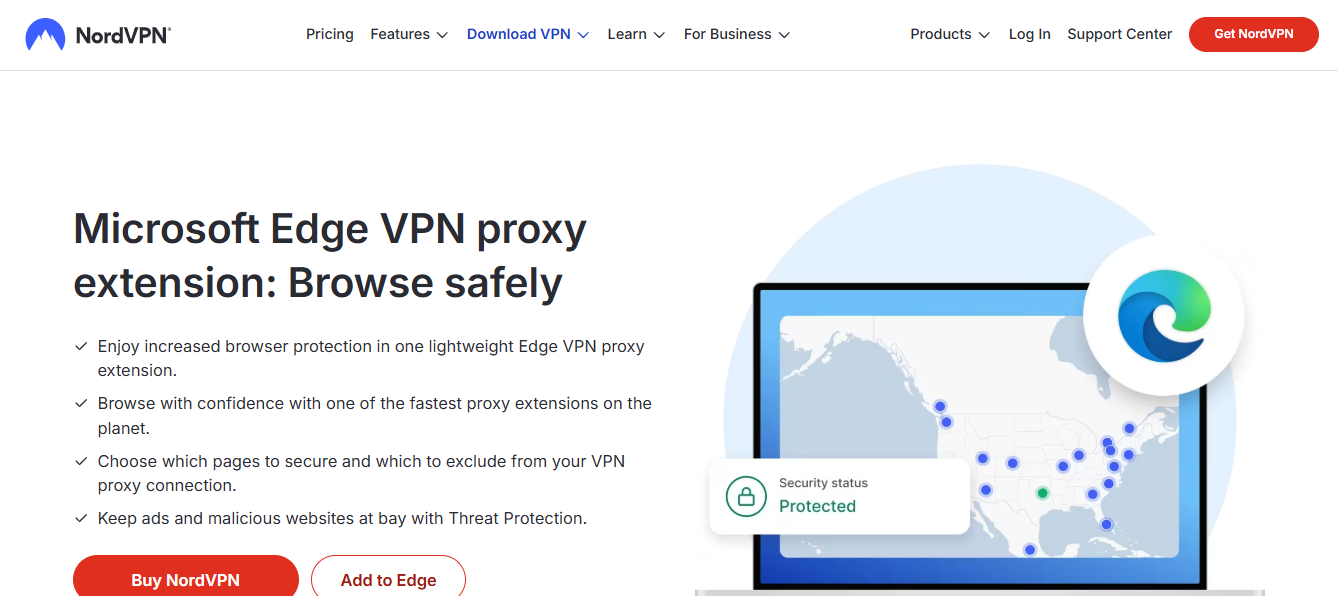
2 Search for the VPN you want NordVPN, ExpressVPN, Surfshark, Windscribe, etc..
3 Click Add to Edge and confirm the extension installation.
4 Sign in to your VPN account if required. Some extensions require you to log in to unlock full features.
5 In the extension’s UI, pick a server location and hit Connect.
6 Verify activity: visit a site like checkmyip.net or ipinfo.io to confirm your IP matches the VPN server location and ensure DNS is resolving through the VPN.
Important caveats:
- Some extensions only proxy traffic, not encrypt all traffic from your device. If you use a “proxy” mode, your other apps may not be protected—only Edge traffic will be tunneled. If you want full device protection, enable the VPN at the system level Method 2 or pick a provider that supports full tunnel in the extension.
- Look for a kill switch in the extension options. A kill switch cuts traffic if the VPN drops, preventing unencrypted data from leaking.
Tips for choosing a browser extension:
- Pick a well-known provider with a solid reputation, transparent privacy policy, and a proven track record for security.
- Check the extension’s requested permissions. If it asks for more than needed broad device access, browser data access, proceed with caution.
- Consider features like split tunneling, auto-connect, and server availability in your region.
Best practices for extension use:
- Always toggle the extension to connect before you start sensitive browsing logins, banking, etc..
- Periodically test for leaks IP, DNS, and WebRTC leaks after you connect.
- If you’re streaming or doing heavy data tasks, pick a server optimized for speed or streaming, and consider switching servers to avoid congestion.
# Method 2: Use a Windows VPN connection system-wide VPN for Edge
1 Open Windows Settings > Network & Internet > VPN.
2 Click Add a VPN connection.
3 In the provider drop-down, choose Windows built-in or your VPN provider if listed.
4 Enter the required connection info server address, VPN type, and sign-in method. This data comes from your VPN provider.
5 Save the profile.
6 To route all traffic through the VPN, click the VPN name in the Network panel and select Connect. When prompted, you may need to allow the VPN to use the gateway on the remote network this is the option that routes all traffic through the VPN.
7 Verify you’re online through the VPN by visiting a site that shows your public IP and location, or use a DNS leak test.
Why use a Windows VPN:
- It protects every app, not just Edge, so your email clients, torrents, and other software use the VPN tunnel.
- It supports features like kill switch, automatic reconnect, and split tunneling offered by many VPN clients depending on provider.
- It’s often the simplest way to ensure your entire device is shielded when you’re on public Wi‑Fi.
Notes on Windows VPN settings:
- If you want all traffic to go through the VPN, ensure the “Use this VPN connection for the remote network” option is enabled in the VPN properties.
- If you prefer to route only Edge traffic through the VPN, use a browser extension Method 1 or configure per-application routing if your VPN supports it advanced.
# Method 3: DoH and Edge privacy features to complement VPN use
Edge includes privacy features like DNS over HTTPS DoH that can work alongside a VPN. DoH encrypts DNS requests, which helps prevent DNS-level snooping by ISPs, but it doesn’t replace the VPN’s traffic encryption. To enable DoH in Edge:
- Go to edge://settings/privacy
- Scroll to Privacy, search, and services, then enable DoH if available and choose a trusted provider.
- Note: If you’re using a VPN, doH can provide an extra layer of privacy for DNS queries that may slip outside the VPN tunnel in some configurations, though this is provider-dependent.
Interface and experience considerations:
- VPN extensions are often quicker to toggle for frequent browsing sessions.
- System VPNs are better when you want all device traffic protected and when you’re on networks that require a stable, consistent tunnel for everything you do, not just in the browser.
Choosing a VPN provider for Edge
Selecting a VPN partner is as important as choosing the method. Here are practical criteria to guide your choice:
- Privacy and no-logs policy: A provider should publish a clear, audited no-logs policy and avoid collecting unnecessary data and avoid jurisdictions that compel data retention unless you’re sure they don’t log.
- Jurisdiction and legal environment: Prefer providers based in privacy-friendly countries with strong protections. avoid providers in jurisdictions with broad data-retention mandates unless they prove they don’t log.
- Speed and server coverage: Look for a broad server network with fast performance in your target regions. If you stream or game, prioritize servers optimized for streaming and gaming.
- Security features: AES-256 encryption, secure VPN protocols WireGuard or OpenVPN, a reliable kill switch, and leak protection DNS and WebRTC.
- Split tunneling: This lets you choose which apps or browser traffic goes through the VPN, useful for streaming or accessing local services.
- Compatibility: Ensure the provider supports Windows, macOS, Android, and iOS. Also verify Edge extension availability or robust browser compatibility if you prefer a browser-based approach.
- Price and refund policy: Look for a transparent price plan with a reasonable refund window. Many providers offer 30-day money-back guarantees.
- Audit and reputation: Independent security audits and transparent practices add credibility.
- Streaming and P2P support: If you plan to access streaming libraries or use P2P networks, verify the provider allows those activities on the chosen servers.
Edge extension vs Windows VPN: quick comparison
- Edge extension browser-level: Quick to set up, convenient for everyday browsing, may offer per-browser protection, can work well in combination with DoH. Risk: some extensions only proxy traffic, not all device traffic. ensure you understand what is being protected.
- Windows VPN system-level: All device traffic is encrypted, better for privacy across apps, often stronger kill switch and policy enforcement. Risk: setup is slightly more involved. may require additional configuration and logs.
Pro tips:
- Start with a reputable extension if you primarily browse. move to a Windows VPN if you need full-device protection or you’re working with apps outside the browser.
- Always verify the VPN is actually protecting you after setup. IP and DNS leak tests are your friend.
- If you’re streaming, test different servers for speed and reliability. Some servers handle HD streaming better than others.
- Free or low-cost VPNs can be tempting but may come with data caps, slower speeds, or privacy concerns. Prefer paid services with transparent practices.
- Enable kill switch if your provider offers it, especially when you’re on public Wi‑Fi or networks you don’t fully trust.
Practical setup walkthroughs
# Quick-start checklist for Edge extensions
- Choose a reputable provider with a solid track record.
- Install the Edge extension from the official store.
- Sign in and authorize necessary permissions.
- Connect to a server near you or in a region that suits your needs.
- Perform a quick test for IP and DNS location and verify there’s no WebRTC leak.
- Consider enabling do-not-track features and DoH in Edge for extra privacy.
# Quick-start checklist for Windows VPN
- Pick a provider with robust Windows clients and clear settings for “use this VPN connection for the remote network” if you want full-tunnel protection.
- Create and configure the VPN profile in Windows Settings.
- Connect and verify with a DNS and IP check.
- If available, enable kill switch and split tunneling for better performance and privacy control.
- Make sure your VPN isn’t leaking your real IP via WebRTC. you can disable WebRTC in the browser if necessary.
Common issues and fixes
- VPN extension not appearing in Edge after installation: restart Edge, sign out and sign back into the extension, or re-install the extension. Check if the extension requires Edge to be updated to a minimum version.
- Connection drops or slow speeds: switch servers, choose a different protocol if your extension offers WireGuard/OpenVPN options, or test on a different device to determine if the issue is local.
- DNS leaks despite VPN: verify DNS settings in the extension and in Edge’s DoH settings. ensure the VPN’s DNS is in use and consider enabling DoH with a trusted provider.
- WebRTC leaks: disable WebRTC in Edge or use a VPN with strong WebRTC leak protection.
- VPN not covering all apps: use a system VPN Method 2 or enable split tunneling in the extension if supported by your provider.
Edge privacy features to pair with a VPN
- Enhanced Tracking Protection: Block trackers and third-party cookies to reduce data collection during browsing.
- DoH DNS over HTTPS: Encrypts DNS requests to prevent eavesdropping on DNS queries. DoH is available in Edge settings and can be used alongside a VPN for extra privacy layers.
- Strong password hygiene and MFA: Use unique passwords and enable multi-factor authentication where possible to minimize risk if credentials are exposed.
- Regular software updates: Keep Edge, Windows, and your VPN client up to date to mitigate known vulnerabilities.
Real-world scenarios and use cases
- Public Wi‑Fi safety: On a café or airport network, a VPN extension or Windows VPN protects your traffic from eavesdropping, while Edge privacy features reduce tracking.
- Bypassing regional restrictions: If you’re traveling and want access to content from your home country, a VPN server in that region can help.
- Secure remote work: When you’re logging into work systems, a VPN ensures credentials and sensitive data are shielded from prying eyes.
- Privacy-conscious browsing: Combine Edge’s privacy enhancements with a reputable VPN to minimize digital fingerprints and data collection.
Best practices and security notes
- Use only trusted VPN providers with audited no-logs policies.
- Prefer VPNs with modern protocols WireGuard/OpenVPN for speed and security.
- Always enable a kill switch for automatic protection if the VPN disconnects.
- Run leak tests after every change to server, extension, or platform.
- Avoid free VPNs that monetize your data or degrade performance.
- Regularly review and limit the extensions you use in Edge. disable or remove extensions you don’t need.
Frequently Asked Questions
# What is a VPN, in simple terms?
A VPN creates a private, encrypted tunnel between your device and a server, shielding your online activity from prying eyes and masking your IP address.
# Does Microsoft Edge come with a built-in VPN?
No, Edge doesn’t include a built-in VPN. You either use a VPN extension from the Edge Add-ons Store or rely on a Windows VPN connection at the system level.
# Can I use a Windows VPN with Edge?
Yes. A Windows VPN protects all traffic on your device, including Edge, unless you configure per-application routing.
# What’s the difference between a VPN extension and a Windows VPN?
A VPN extension typically covers browser traffic or some browser-protected data and is quick to toggle on/off. A Windows VPN covers all traffic system-wide, offering broader protection and consistent security across all apps.
# How do I verify my VPN is actually working in Edge?
Check your IP address and location on a site like ipinfo.io or checkmyip.net after connecting. You should see the VPN server’s location and not your real location. Also test for DNS leaks and WebRTC leaks.
# Can VPNs affect browsing speed?
Yes, VPNs can slow down your connection depending on server distance, server load, and encryption overhead. Choose fast servers or a provider with optimized streaming servers if speed is important.
# Should I use a free VPN for Edge?
Free VPNs often come with limits, ads, or privacy concerns. For reliable privacy and performance, a paid, reputable VPN is usually a better choice.
# How do I enable DoH in Edge?
Go to edge://settings/privacy, enable DNS over HTTPS, and choose a trusted DoH provider to encrypt DNS queries in addition to your VPN.
# How do I avoid WebRTC leaks in Edge?
Disable WebRTC in Edge via settings or use a helper extension that blocks WebRTC, and ensure your VPN offers WebRTC leak protection.
# What is split tunneling, and should I use it?
Split tunneling lets you route some apps through the VPN while others bypass it. It’s useful for local services or streaming while keeping sensitive activities protected.
# Can Edge’s privacy features replace a VPN?
Edge’s DoH and Tracking Protection are privacy-enhancing but do not replace a VPN’s broader traffic encryption and IP masking. They’re best used together for stronger privacy.
# Is it safe to install VPN extensions in Edge?
Yes, as long as you install extensions from reputable providers, review permissions, and keep the extension up to date. Avoid extensions from unknown sources.
# What should I do if Edge VPN extension isn’t connecting?
Try restarting Edge, updating to the latest Edge version, re-authenticating with the VPN, selecting a different server, or re-installing the extension. If problems persist, test the Windows VPN path to isolate whether the issue is browser-based or system-wide.
# How often should I change VPN servers?
If you notice slow speeds or buffering, switch to a different server. For best results, use servers that are geographically close to you or specialized streaming servers if you’re accessing video libraries.
# Can I use VPNs to bypass ISP throttling?
VPNs can help obscure traffic patterns from your ISP, potentially reducing throttling on certain activities, but outcomes vary. Always pair with good security practices and compliant behavior.
# Do VPNs work on mobile Edge browsers too?
Yes. Most major VPN providers offer mobile apps with Edge-compatible browsers. The same basic concepts apply: install, connect, verify, and test for leaks.
# Are there any legal considerations when using a VPN with Edge?
VPN usage is legal in most places, but you should follow local laws and service terms. Some regions restrict VPN access or certain types of traffic. always stay informed about your jurisdiction’s rules.
If you want a quick, practical takeaway: start with a trusted VPN extension in Edge for straightforward daily browsing, and consider a Windows VPN if you need complete device protection or you’re on networks you don’t entirely trust. Keep privacy in mind by enabling DoH, using Edge’s tracking protections, and performing routine leak tests after any change. And don’t forget—the NordVPN deal image you saw above is a handy nudge to explore a reputable option if you’re shopping for a VPN today.
Hoxx vpn edge extension review 2025: features, performance, privacy, pricing, and alternatives